- +91-8882964379
- info@certilize.com

Business Opportunities in Tyre Recycling and the Importance of MOEF Approval
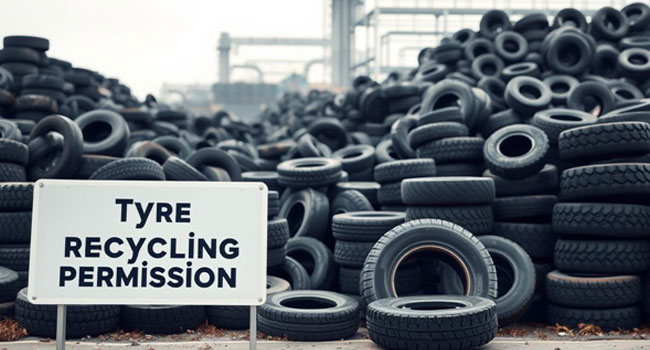
Introduction
India is a huge automobile market in the world and as such is one of the biggest markets in tyres. Millions of tyres go to the end of their life and are disposed of every year. Indian estimates of the industry show that India produces over 275,000 tyres in a day and over 3 million tonnes of waste tyres per year. This huge quantity of tyres has made the disposal of the used tyres a major environmental, economic and business issue.
On the one hand, the used tyres are known to be a great environmental threat when not treated correctly breeding grounds of mosquitoes, risk of fire and toxic pollution sources when burned. They on the other hand are a business opportunity worth billions of rupees, should they be handled responsibly, by recycling and recovery.
Tyre recycling is an emerging business in India. Since retreating to pyrolysis, crumb rubber manufacture and even more novel applications such as rubberized roads, entrepreneurs are discovering commercial and viable means of converting waste tyres into products of value.
Nevertheless, the government of India controls this business due to environmental hazards. Any company or entrepreneur interested in importing used tyres or establishing a recycling facility, should get permissions, above all, with the Ministry of Environment, Forest and Climate Change (MOEF&CC).
This blog explores:
- Tyre recycling business opportunities.
- MOEF approval is significant.
- The regulatory framework.
- The gradual compliance process.
- And an extensive FAQs page to dispel the lingering doubts.
Why Tyre Recycling is important in India
Environmental Protection
- Tyres are non-biodegradable and take decades to be last in the environment.
- Poor dumping contaminates soil and ground water.
- The destruction of tyres emits dioxins, PAHs and toxic gases which are unhealthy.
Resource Recovery
- Tyres have rubber, steel, carbon black and oil.
- These valuable resources can be recovered through recycling and this will lower the reliance on imports.
Circular Economy
- Recycling assists in developing a cycle in which waste is transformed into raw material.
- Less dependence on natural resources such as crude oil that are virgin (used to make rubber).
Employment Opportunities
- The recycling of tyres development results in job opportunities in collection, processing, logistics and manufacturing.
Energy Security
- Pyrolysis oil obtained during tyre can replace furnace oil and other fuels.
Business Opportunities in Tyre Recycling
Tyre Retreading
Tyres which had a good casing can be retreaded and new treads put on. Retreaded tyres are cheaper as compared to new tyres and they are dominant in the transport industry.
Business potential: Trucking companies and bus operators are high demand.
Crumb Rubber Production
Shredded tyres may be recycled in the form of crumb rubber and used in:
- Sports fields
- Running tracks
- Playground surfaces
- Road asphalt rubberized.
Business potential: NHAI projects push to have rubberized roads.
Pyrolysis Plants
Pyrolysis involves decomposition of tyres in high temperatures without the presence of oxygen to give:
- Tyre oil (replacement of furnace oil)
- Carbon black (pigments, paints, rubber industry)
- Steel (recyclable scrap)
Business opportunity: Strong demand of substitutes of carbon black and furnace oil.
Reclaimed Rubber
Using reclaimed rubber as a substitute to footwear, mats, hoses and conveyor belts – recycling of tyres.
Business potential: Energetic demand in the field of footwear and industrial rubber products.
Cement Kiln Co-Processing
Alternative fuel in cement kilns is made with tyres. Tyres offer good energy sources since they have high calorific value.
Innovative Products
Furniture, tiles, garden pathway and art using recycled tyres. Urban India with niche and expanding market.
Risks of Unregulated Tyre Recycling
- Pyrolysis plants that are not conditioned emit carcinogen fumes.
- Tyres when burnt openly result in extreme air pollutants.
- Waste tyres which are being imported illegally make India a dumping ground.
- Workplace risks to non-protective clothing workers.
Importance of MOEF Approval
Hazardous and other wastes are regulated by the ministry of Environment, forest and climate change (MOEF and CC) through the Hazardous and other waste (management and transboundary movement) rules, 2016. Waste of used tyres are classified as “other wastes” which are limited items to be imported and processed.
Why MOEF Approval is Crucial
- Legal Compliance – The imports are illegal without MOEF approval. The consignments are liable to seizure, as well as penalties.
- Environmental Safety – This is to make sure that only facilities that have good emission control and waste management practices are operated.
- Public health protection – Eliminates exposure of communities to toxic emissions of unsafe pyrolysis.
- Avoiding Dumping – Does not allow India to become a dumping place of the tyre waste in the developed countries.
- Supporting Circular Economy – Rewards true recyclers and investors that embrace sustainable behavior.
Tyre Recycling Business Start-Up Guide
Step 1: Business Planning
- Determine your recycling model: retreading, crumb rubber, pyrolysis or reclaimed rubber.
- Make a Detailed Project Report (DPR).
Step 2: Company Registration
- Register Companies Act/LLP/Proprietorship.
- Get Import Export Code (IEC) in case of importation of tyres.
Step 3: Land and Factory Setup
- Choose the land in the industrial zone (non-residential).
- Construct sheds and machinery.
Step 4: Approvals of Pollution Control Board
- Consent to Establish (CTE) and Consent to Operate (CTO) by State Pollution Control Board.
- Air and Water Acts Compliance.
Step 5: MOEF Permission (if importing used tyres)
- Submit to Hazardous Substances Management Division of MOEF.
- Send information of technology, capacity, and pollution control systems.
- Get NOC from MOEF.
Step 6: DGFT Import Authorization (where necessary)
- Obtain limited import license with DGFT.
- Attach MOEF permission.
Step 7: Factory Operations
- Install emission control systems, storage and machinery.
- Educate train workers on safety measures.
Step 8: Compliance after the operation
- Keep waste records and records of products processed.
- Send quarterly reports to CPCB/SPCB on compliance.
Government Fees
In the case of imports in restricted items category (used tyres):
- Rs. 1 per Rs. 1,000 CIF value.
- Minimum: Rs 500
- Maximum: Rs 1,00,000
Market Potential in India
- Transport Sector – Retreaded tyres save money to the fleet operators.
- Infrastructure – Roads Crumb rubber is demanded to use in the construction of roads.
- Fuel Market – Tyre oil is competed with furnace oil.
- Export Potential – Recycled products may be exported to the countries where there is demand of crumb rubber and reclaimed rubber.
The increasing number of vehicles in India means that the used tyres will continue to be generated, which will guarantee the availability of raw materials.
Indian Tyre Recycling Future
- Government Support Push towards Extended Producer Responsibility (EPR) will compel the tyre makers to provide recycling.
- Technology Upgradation – High level pyrolysis and emission control systems will be required.
- Green Financing – Banks and investors are more and more in favor of environmentally friendly businesses.
- Innovation – Recycled tyre uses are gaining momentum in the use of smart rubberized roads, eco-furniture, etc.
Conclusion
Recycling of tires in India is not only a pressure on the environment but a huge business prospect. Having millions of tyres every year, the industry boasts of good availability of raw materials and varied product usage – road construction, industrial fuel among others.
Nevertheless, one should not disregard the environmental hazard of the incorrect recycling. This is why the use of used tyres should be imported under the permission of MOEF, and why the activity of the recycling plants should be permitted under the permission of SPCB/CPCB.
The businessmen who venture into this field should focus on compliance, technology, and safety. Companies that integrate sustainability and profitability will not just create successful businesses but will in the process play a role to put India on the path of having a circular, green economy.
Frequently Asked Questions
-
Is permission to recycle tyres required by MOEF to all the tyre recycling businesses?
No. Only after intending to import used tyres, it is mandatory. The domestic recycling businesses require SPCB approvals.
-
May traders import second hand tyres to resell them?
No. Used tyres can only be imported by registered recyclers or retreaders who have been approved by MOEF.
-
What would occur in case of importation of tyres without the approval of MOEF?
It is possible to take consignment, impose penalties and blacklist the importer.
-
What is the time of MOEF approval?
Normally 1-2 months subject to documentation and site checks.
-
What is the role of DGFT?
DGFT grants used tyre import authorization, which is only granted with approval of MOEF.
-
Is pyrolysis plant legal in India?
Yes, with the condition that they should comply with emission standards and possess MOEF/SPCB certification. Numerous bootleg plants have been closed down.
-
Are there any possibilities of exporting recycled products?
Yes. Exportable is the crumb rubber, reclaimed rubber and carbon black substitutes.
-
How much money will it take to start a small-scale tyre recycling unit?
50 lakh to 5 crore, based on scale and technology, depending.
-
Is recycling of tyre profitable?
Yes. As the demand of crumb rubber, tyre oil, and steel is realized, the businesses will be able to make a profit after 2-3 years provided that these are managed appropriately.
-
What are the regulations of tyre imports and tyre recycling in India?
The Hazardous and Other wastes (Management and Transboundary movement) Rules, 2016 and the corresponding SPCB/CPCB guidelines.