- +91-8882964379
- info@certilize.com

EPR ELVs
Overview
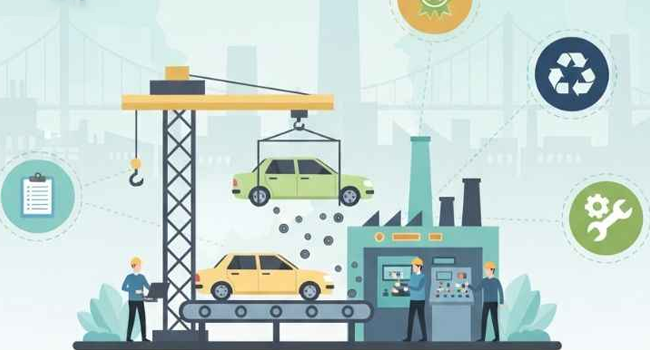
As per the Environment Protection (End-of-Life Vehicles) Rules, 2025, for vehicle producers operating in India, Extended Producer Responsibility (EPR) for End-of-Life Vehicles (ELVs) has become a compulsory environmental compliance. Operative from 1st April 2025, these rules start a structured, transparent, and environmentally responsible outline for the collection, scrapping, recycling, and disposal of ELVs.
The ELV EPR regime will make sure that vehicles introduced into the Indian market are eventually scrapped through authorised and environmentally sound channels and the vehicle producers are legally obligated to ensure that. If non-complied with the rules, then it can lead to environmental compensation, suspension or revocation of registration, and legal action.
CERTILIZE as an expert guides you from start to end and manages compliance services to help producers, registered vehicle scrapping facilities and others to comply effortlessly with the ELV EPR framework.
What do you mean by EPR for End-of-Life Vehicles?
Under the environment protect ion act 1986, and as per the new ELV rules, 2025 Extended Producer Responsibility (EPR) for ELVs is a legal requirement. The vehicle producers have a responsibility to make sure that the vehicles whose life is expired are scrapped, dismantled and recycled in an environmentally safe way which do not harm the environment.
Based on the weight of steel used in vehicles placed on the market in earlier years the EPR obligations are calculated annually. As per the quantity of steel recovered from scrapped ELVs that is produced by the registered vehicle scrapping facilities, EPR Certificates is purchased primarily through them to fulfil the compliance.
Why ELV EPR Compliance is Compulsory
ELV EPR has been make known to:
- To stop disposal of old vehicles in an unscientific way and illegal disassembly.
- To recover steel and other materials and indorse formal recycling.
- To minimize public health risks and pollution that is harming the environment.
- To promoted budget practices in the automobile segment.
- Beyond the point of sale confirm producer accountability.
under the ELV EPR framework registration and compliance is compulsory. If fail to fulfil the compliance it may cost you compensation, legal action by the authorities and the defaulter names will be published on the CPCB portal.
Applicability & Eligibility
The following entities are eligible for the ELV EPR framework:
Producers/manufacturers
- Manufacturers that sell vehicles under their own brand
- Companies that sell vehicles as their own brand but it is manufacture by third party.
- vehicles importers in India
Other Covered Entities
- Registered Vehicle Scrapping Facilities (RVSFs)
- Consumers that own more than 100 vehicles
Except categories such as agricultural tractors and harvesters are excluded from the rules. The rules are applicable to vehicles both transport and non-transport, electrical vehicles, e-rickshaws etc.
Required documents:
Registration For Producer
- COI/ LLP certificate
- Gst
- PAN of the company
- sales / import details of vehicle manufacturer
- Details of authorized person/signatory
- Contact information and website details
For filing of returns /EPR Compliance
- Annual Return fill form 1
- Details of steel that is used
- EPR concern calculations
- purchase records of EPR certifications
Government Fees
Producer Registration Fees (Based on Regular Turnover)
| Regular Turnover | Fee (INR) |
| Up to ₹10 Cr | ₹25,000 |
| ₹10–50 Cr | ₹50,000 |
| ₹50–250 Cr | ₹2,00,000 |
| ₹250–1000 Cr | ₹5,00,000 |
| Above ₹1000 Cr | ₹10,00,000 |
Disclaimer: At the time of return filing 50% of the registration fee is payable again as an annual processing fee
RVSF Registration Fees
| Scrapping Capacity (ELVs/Year) | Fee (INR) |
| Up to 6,000 | ₹25,000 |
| 6,001 – 15,000 | ₹50,000 |
| 15,001 – 30,000 | ₹75,000 |
| Above 30,000 | ₹1,00,000 |
Stepwise ELV EPR Process
- producer category identification & Applicability assessment
- Application of online EPR registration with CPCB through (Form-4)
- annual EPR obligations calculation
- connect with registered vehicle scrapping facilities
- through the CPCB portal obtaining EPR certificates
- Tuning of current and past EPR obligations
- Completion of annual returns within the time.
- audit support and monitoring ongoing compliance.
Timelines
- Registration under producer takes upto15 -20 working days
- Annual EPR Declaration: By 30th April
- Return Filing annually takes place by 30th June
- EPR Certificates validity is up to 5 years from generation of certificate.
It may take more or less time depend upon the data and clarification from the department if any.
Payment
- Government fees as shown by CPCB/SPCB
- Costs of EPR certificate
- Professional fees depend upon services
- Miscellaneous cost that will include document preparation
Certilize notify you about the payment upfront no hidden cost or extra pay.
Non-Compliance may face penalties such as:
In case you fail to comply with ELV EPR rules it may result in:
- Compensation charged by CPCB/SPCB
- Department can Suspend or cancel your EPR registration.
- Defaulters will be listed on cpcb or spcb portal
- Ban on business
- Accountability under the Environment (Protection) Act, 1986
If compliance is done on time, it may allow part relief or refund of environmental compensation, subject to governing approval.
Why Choose Certilize?
Our company has professionals that are specialized with the process of obtaining the certificate and can guide you with affluence to achieve the best result. Our services include the following: –
- Start to finish Support: Our team of experts will guide from arranging the documents till the issuance of the certificate by providing you information for each and every steps.
- Professional expertise: We have professional who has in depth knowledge in relation to ELVs.
- Quick Process: with the help of our team, we reach the goal within the time and do not delay the process.
- Personalised Solutions: our team has the ability even to solve the complex problem; we are best at what we do and can apply without any complexity.
We handle compliance-so you can focus on growth.
For professional guidance and to avoid any hindrance contact us and will apply the certificate with ease as we have experience.
Frequently Asked Questions
-
When do the ELV EPR Rules come into force?
The ELVs EPR Rules came into force on 1st of April 2025.
-
Who is required to obtain EPR registration?
All the vehicle producers that include manufacturers, importers and brands that sell through third party under their own name.
-
Process to calculate EPR targets?
Based on the weight of steel used in vehicles placed on the market in earlier years the EPR obligations are calculated annually.
-
What is ELVs EPR Certificate?
Under the environment protect ion act 1986, and as per the new ELV rules, 2025 Extended Producer Responsibility (EPR) for ELVs is a legal requirement. The vehicle producers have a responsibility to make sure that the vehicles whose life is expired are scrapped, dismantled and recycled in an environmentally safe way which do not harm the environment.
Based on the weight of steel used in vehicles placed on the market in earlier years the EPR obligations are calculated annually. -
It is possible, to carry forward the EPR targets?
Yes, it can be doable, up to 30% of unmet targets can be carried forward for four succeeding years.
-
Are electric vehicles covered?
Yes, electric vehicle is covered, except batteries, which are governed under separate EPR rules.